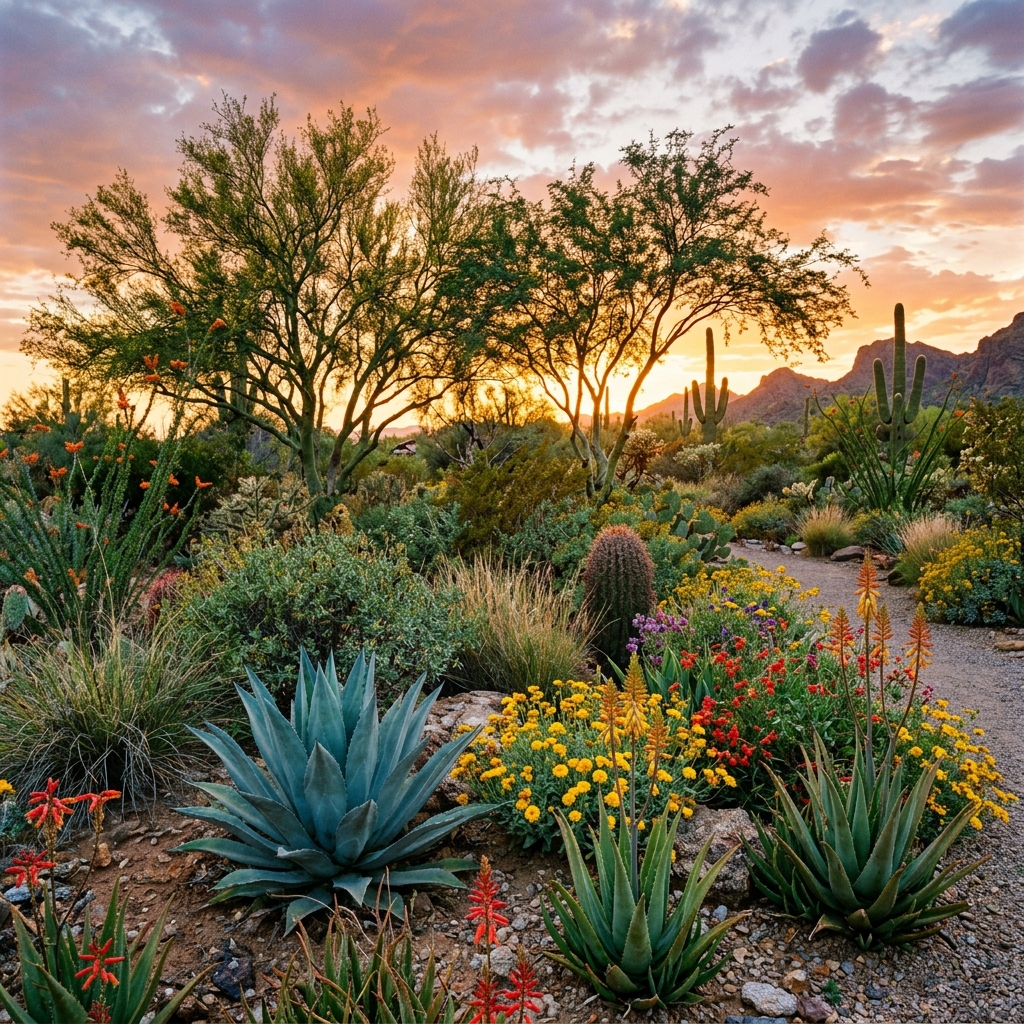
Discover the best plants for arid regions, from agave to palo verde. Learn water-wise care tips that cut outdoor water use by up to 75 percent.
The best plants for arid regions are drought-tolerant species that store water and survive on little rain. Top picks include succulents like agave and aloe, native grasses like blue grama, trees like palo verde and acacia, and flowering plants like desert marigold. Choosing native, water-wise plants can cut outdoor water use by 50 to 75 percent.
Gardening in a dry climate can feel like a losing battle. You water, the soil dries out by afternoon, and half your plants look crispy by August. I get it. But the problem usually isn’t the climate. It’s the plants.
Pick the wrong ones, and you’ll spend your whole summer dragging a hose around. Pick the right ones, and your yard mostly takes care of itself. That’s the whole idea behind this post. I’ll walk you through what makes arid climates so tricky, why smart plant choices matter, and which plants actually thrive when rain is scarce.
There’s a real payoff here too. The right plants save water, cut your bills, and hold up through drought without much fuss from you.
What Makes Arid Climates So Hard on Plants?
An arid region, by definition, gets very little rain. A desert receives no more than about 10 inches of precipitation a year. That’s not a lot to work with.
But low rainfall is only part of the story. A few things make these climates rough on plants:
- Big temperature swings. Days can be scorching. Nights can turn surprisingly cold. Plants have to handle both.
- Intense sun. Direct, relentless sunlight stresses anything that isn’t built for it.
- Poor, fast-draining soil. Desert soils are often sandy or rocky and don’t hold nutrients well.
- High evaporation and wind. Water disappears fast, whether it’s from the soil surface or the plant itself.
Plants that survive in these conditions have adapted over a long time. They’re called xerophytes. Cacti are the classic example. Their spines are actually modified leaves, and their thick stems store water. That waxy skin you see? It cuts down on water lost to evaporation.
So when you’re choosing plants, you’re really looking for species that already know how to handle all of this. That’s the shortcut to a garden that doesn’t fight you.
Why Bother Choosing Water-Wise Plants?
The benefits go past just keeping things alive. Here’s what you actually get.
You use way less water. In the U.S., about 50 percent of home water use goes to landscaping and lawns. In the dry Southwest, it can hit 60 percent because so much evaporates or runs off. Switching to drought-tolerant plants and xeriscaping principles can cut that outdoor water use by 50 to 75 percent, according to National Geographic. Some sources put the savings even higher.
You save real money. According to HydroPoint, xeriscaping can reduce a water bill by up to 80 percent. In Flagstaff, Arizona, homeowners save an average of 8,000 gallons of water a year, which works out to about $275 annually. In Novato, California, households that switched from traditional lawns saved an estimated 120 gallons of water a day, per National Geographic.
There’s less upkeep. Native, drought-tolerant plants don’t need much once they settle in. HydroPoint notes that xeriscaping can cut yearly lawn maintenance costs by roughly 87 percent. No more constant mowing, fertilizing, and watering.
It’s better for the environment. Native plants support local birds, bees, and other pollinators. They resist local pests without much help, so you skip a lot of the chemicals. And with global freshwater demand predicted to outrun supply by 40 percent by 2030 (per the United Nations), using less outdoor water genuinely matters.
Your landscape holds up. When drought hits, a yard built around desert-adapted plants keeps looking good. A thirsty lawn just turns brown.
One nice bonus, too. HydroPoint reports that xeriscaping can boost property values by around 14 percent, since more buyers want low-water, sustainable yards.
The Best Plants for Arid Regions
Now for the fun part. Here are the plants worth building your dry garden around.
Succulents: Agave, Aloe, and Echeveria
Succulents are the obvious starting point. They store water right in their leaves and stems, so they can go a long time between drinks.
Agave is one of the toughest plants you’ll find. There are around 200 species across the Southwest, Mexico, and Central America. They handle heat, cold, drought, and poor soil, and their bold rosettes make great focal points. One quirky thing about them: they can take anywhere from 5 to 50 years to flower, and the plant slowly dies after it does. Keep them away from walkways and patios, though. Those leaves are sharp.
Aloe brings color that a lot of desert plants don’t. These succulents come from southern and eastern Africa, and they put on a real show in winter and early spring with tubular flowers in yellow, coral, and red-orange. Hummingbirds love them. Aloe tolerates most soils but needs good drainage, and it can take some frost damage below 24°F, so keep that in mind if your winters get cold.
Echeveria is the compact, decorative one. Those tight little rosettes look almost too perfect to be real, and they’re a favorite in containers and rock gardens. Like other succulents, they want lots of sun and soil that drains fast. Overwatering is the quickest way to kill them.
Drought-Resistant Shrubs: Desert Rose and Creosote Bush
Desert Rose (Adenium) is a striking shrub with a swollen, sculptural base that stores water. It’s native to arid regions and does well in low humidity. It’s winter hardy in zones 10 and 11, so in cooler areas people often grow it in pots and bring it inside.
Creosote Bush is about as tough as desert plants get. It’s a mainstay of North American deserts, known for surviving brutal drought and living an incredibly long time. After a rain, it gives off that distinctive smell a lot of people associate with the desert. It asks almost nothing of you.
Native Grasses: Fountain Grass and Blue Grama
Grasses add movement and soft texture, which balances out all the spiky succulents.
Fountain Grass forms graceful, arching clumps with feathery plumes. It’s a popular ornamental for dry gardens because it looks good with very little water. Just check which type you’re planting, since some varieties spread aggressively.
Blue Grama is a standout native. It forms a short mat, only about three to six inches tall, and needs just seven inches of water a year, according to HydroPoint. Leave it unmowed while it flowers and it sends up an unusual 10-inch seed stem that looks like little flags. It’s a smart lawn alternative.
Trees for Dry Climates: Palo Verde and Acacia
Yes, you can have trees in an arid yard. You just need the right ones.
Palo Verde is native to the arroyos and foothills of the Southwestern deserts. Its green to blue-green bark is the cool part: it photosynthesizes through the bark itself, even when the tree drops its tiny leaves to save water. In spring it’s covered in bright yellow flowers. Give it full sun, good drainage, and an occasional deep soak in summer. One tip, don’t prune it in summer, since it can sunburn.
Acacia is a big, varied group ranging from trees to shrubs to groundcovers. They offer shade, screening, and flowers depending on the type. They like full sun and aren’t picky about soil. For the tree types, water deep but infrequently, along the edge of the canopy rather than at the trunk, so the roots grow out strong.
Flowering Plants: Desert Marigold and Ghost Flower
Who says a dry garden has to look bare? These add color.
Desert Marigold produces cheerful yellow flowers, where lots of little florets pack into a dense two-inch head that reads as one bloom. It’s native across Arizona, New Mexico, Colorado, Nevada, and southern California, and it flowers for a long stretch.
Ghost Flower (Mohavea) is a lesser-known annual, growing one to two feet tall with pale, almost translucent white flowers tinged with purple or blue. It’s native to the deserts of the Southwest, and that ghostly look is exactly where it gets its name.
How to Plant and Care for a Dry Garden
Picking the right plants is most of the battle. But a few habits make a real difference.
Prep the soil. Most desert plants need drainage above all else. Work organic material into heavy soils so water moves through instead of pooling. If your ground stays soggy, roots will rot.
Water deep and infrequently. This one trips up a lot of people. Instead of a light sprinkle every day, give plants a slow, deep soak less often. That pushes roots to grow down, which makes plants tougher during dry spells. Drip lines and soaker hoses beat sprinklers, since they put water at the roots and lose less to evaporation.
Group plants by water needs. It’s called hydrozoning. Put the thirstier plants together and the toughest ones in their own zone, so you’re not overwatering half the yard to keep the other half happy.
Mulch. A layer of mulch keeps soil cooler, slows evaporation, and blocks weeds. Rock mulch works well in desert gardens and looks the part too.
Mind the sun and shade. Full sun suits most of these plants, but a few, like some aloes, look better with a little afternoon shade in the hottest months. Pay attention to how light moves across your yard.
Adjust with the seasons. Fall and late winter are usually the best times to plant agaves, aloes, and yuccas. Water a bit more during the peak of summer, then ease way back in the cooler months.
Mistakes That Kill Dry Gardens
Even good plants fail when a few common errors creep in. Watch out for these.
- Overwatering. Honestly, this is the number one killer. Many desert plants, including Texas sage, will actually die if you water them too much. When in doubt, water less.
- Bad drainage. Water that sits around rots roots. Fix drainage before you plant, not after.
- Wrong plant choices. Non-native, water-hungry species just won’t hold up. Go native whenever you can.
- Skipping soil prep. Sticking a plant in unimproved, poorly draining ground sets it up to struggle.
- Ignoring your microclimate. A spot against a south-facing wall behaves very differently from an open, exposed bed. Check your local climate data and pay attention to your own yard.
- Neglecting pests. Even tough plants get problems. Aloe, for instance, can catch aloe mite, which causes odd growths. Snip off affected parts early to stop it spreading.
Ready to Rethink Your Yard?
The takeaway is pretty simple. Fighting a dry climate with thirsty, mismatched plants is exhausting and expensive. Working with it, by choosing plants that already belong there, gives you a yard that looks good, costs less, and survives whatever the weather throws at it.
Start small if you want. Swap one thirsty flower bed for agave, blue grama, and a splash of desert marigold. See how it goes. Once you notice how little water it takes, the rest of the yard tends to follow.
For plant ideas suited to your exact area, check the searchable plant guides from your local water conservation department or a regional native plant society. They’ll point you to species that already thrive right where you live.
Frequently Asked Questions
What is the most drought-tolerant plant for arid regions?
Agave is one of the most drought-tolerant options. It stores water in its thick leaves and tolerates heat, cold, drought, and poor soil. Cacti and creosote bush are also extremely tough, surviving long stretches with almost no rain.
How much water can drought-tolerant plants save?
Quite a bit. Xeriscaping with drought-tolerant plants can cut outdoor water use by 50 to 75 percent, according to National Geographic, and reduce water bills by up to 80 percent, per HydroPoint. Some households save more than 120 gallons of water a day.
What is xeriscaping?
Xeriscaping is designing a landscape to reduce or eliminate the need for irrigation. It usually means replacing thirsty lawns with drought-tolerant native plants, mulch, rocks, and efficient watering methods like drip lines. It’s not the same as zero-scape, which uses no water at all.
Can I grow trees in an arid region?
Yes. Palo verde and acacia both thrive in dry climates. Palo verde even photosynthesizes through its green bark when it drops its leaves to save water. Both prefer full sun and only need occasional deep watering once established.
What’s the biggest mistake people make with desert plants?
Overwatering. Many desert plants, like Texas sage, can die from too much water. Most arid-region plants prefer deep, infrequent watering and soil that drains quickly, so err on the side of less.
When is the best time to plant in a dry climate?
Fall and late winter are ideal for succulents like agave, aloe, and yucca. Cooler weather lets roots settle in before the intense summer heat arrives.