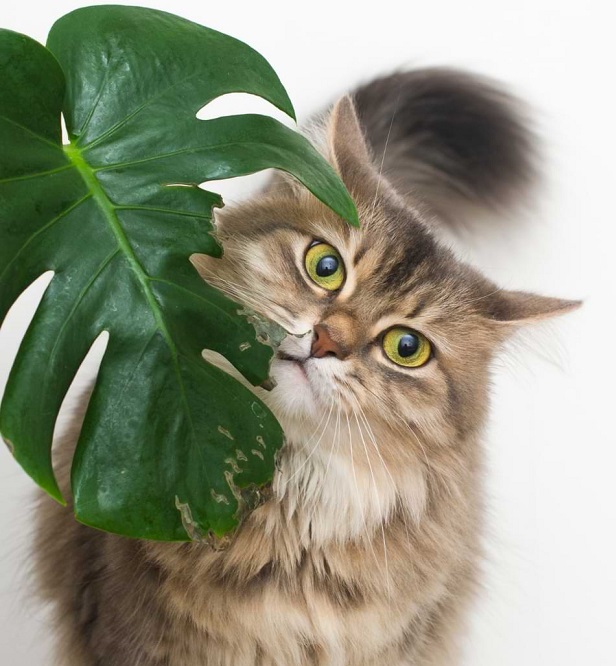
Yes, monstera plants are toxic to cats. If your cat chews on the leaves, stems, or aerial roots, it can end up with a painful mouth, heavy drooling, and some real discomfort. The good news is that this is almost never fatal. Most cats take one bite, feel the burn, and quit. Still, you don’t want them dealing with that pain, and you don’t want to guess whether the reaction will stay mild.
Here’s the short version: Monstera (the Swiss cheese plant and its relatives) contains insoluble calcium oxalate crystals. These act like microscopic needles. When the plant tissue breaks, the crystals dig into soft tissue in the mouth and throat. Symptoms show up fast. Rinse the mouth if you can, keep the plant out of reach, and call your vet or a pet poison hotline if things look bad. That’s the core of it. Now let’s break it down so you know exactly what you’re dealing with.
What the toxicity actually is
Monstera deliciosa is the big one most people mean when they say “monstera.” It’s also called Swiss cheese plant, hurricane plant, ceriman, or Mexican breadfruit. Related species in the Monstera genus carry the same risk. The entire plant is considered toxic to cats (and dogs). Leaves, stems, aerial roots, and even the sap can cause problems. The ripe fruit is the exception for humans—it’s edible—but cats still shouldn’t be eating any of it.
The toxic principle is insoluble calcium oxalate crystals, also called raphides. These are needle-shaped structures packed inside specialized cells. When a cat bites or chews the plant, the cells rupture and the crystals shoot into the soft tissues of the mouth, tongue, lips, and throat. It’s a physical irritation more than a chemical poison that floods the bloodstream. That distinction matters. You’re not looking at kidney failure the way you are with true lilies. You’re looking at immediate, localized pain and inflammation.
Some cats get only mild drooling and a few minutes of pawing at their face. Others develop more swelling, refuse food for a while, or vomit if they swallowed plant material. In rare cases the swelling can affect the throat enough to make breathing or swallowing harder. That last part is uncommon, but it’s the reason you treat any exposure seriously instead of shrugging it off.
Look-alikes and related plants work the same way. Philodendrons, pothos, peace lilies, Chinese evergreens, and many other aroids (the Araceae family) contain the same kind of crystals. If you’ve got a big tropical collection, chances are several plants share this trait. Monstera isn’t uniquely dangerous among houseplants, but it’s one of the most popular, so it shows up in a lot of homes with cats.
Why cats react the way they do
The crystals are a defense mechanism. In the wild, they discourage animals from munching the plant. The pain is immediate, so most animals drop the leaf and move on. Cats are no different. The burning sensation usually stops them after a nibble or two. That’s why severe systemic poisoning is rare—they simply don’t keep eating.
Still, some cats are more determined, more curious, or just bored enough to keep going. Kittens and young cats are especially likely to experiment with plants. Bored indoor cats with limited enrichment sometimes turn to foliage for entertainment. A plant sitting on the floor or a low shelf is an open invitation.
The crystals don’t dissolve easily in the mouth or digestive tract. They stay sharp and keep irritating until the body flushes them or the tissue calms down. That’s why symptoms can linger for hours even after the cat stops chewing. Water or milk can help dilute and rinse some of the material away, but it doesn’t magically neutralize everything.
Symptoms to watch for
Symptoms usually appear within minutes. You’ll often see:
- Excessive drooling or foaming at the mouth
- Pawing at the face or mouth
- Head shaking
- Redness or mild swelling of the lips, tongue, or gums
- Vocalizing or looking uncomfortable
- Refusal to eat
- Vomiting (if plant material was swallowed)
- Difficulty swallowing
In more serious cases you might notice:
- Noticeable swelling in the mouth or throat
- Trouble breathing or open-mouth breathing
- Extreme lethargy
- Continued retching
Most cats recover within a day or two once the irritation settles. Mild cases often improve in a few hours. If your cat is still drooling heavily, won’t drink, or seems to be struggling hours later, it’s time for professional help.
What to do right away if your cat chews monstera
Stay calm. Panic doesn’t help your cat and it doesn’t help you think clearly.
- Move the cat away from the plant and any fallen leaves or stems.
- Gently check the mouth if the cat lets you. Remove any visible plant pieces. Don’t force the mouth open.
- Rinse the mouth with clean water if possible. Some people offer a small amount of milk or tuna water to encourage swallowing and dilute the crystals. Only do this if the cat is willing and able to drink. Never force liquid.
- Do not induce vomiting unless a veterinarian specifically tells you to.
- Call your vet or a pet poison control line. In the U.S., the ASPCA Animal Poison Control Center is (888) 426-4435 (a fee may apply). Have the plant name ready and describe what you saw.
Keep an eye on breathing, swelling, and energy level for the next several hours. If symptoms worsen or new ones appear, head to an emergency clinic.
How vets usually handle it
There’s no specific antidote for calcium oxalate crystals. Treatment focuses on rinsing the mouth, controlling pain and inflammation, and supporting the cat while the irritation resolves. In mild cases the vet may simply examine the mouth, flush it, and send you home with instructions to monitor. More uncomfortable cases might get pain medication, anti-nausea drugs, or fluids if the cat isn’t drinking well. Severe swelling that threatens the airway is rare but treated as an emergency—oxygen, anti-inflammatories, and close monitoring.
Most cats bounce back without long-term issues. The bigger risk is repeated exposure if the plant stays accessible.
How toxic is it, really?
Compared to plants like true lilies (which can cause fatal kidney failure from a tiny amount of pollen or leaf), monstera sits in the mild-to-moderate range. The ASPCA lists it as toxic to cats and dogs because of the insoluble calcium oxalates. Clinical signs match what you see with other common aroids: oral irritation, burning, drooling, vomiting, difficulty swallowing.
Death is extremely uncommon. The plant’s own defense mechanism—the intense pain—usually stops further ingestion. Large amounts could theoretically cause more widespread irritation or secondary problems from not eating or drinking, but that level of exposure is rare in household settings.
That doesn’t mean it’s “safe enough.” Pain is still pain. A swollen mouth is still miserable for your cat. And every exposure carries a small chance of a stronger reaction. If you can keep the plant and the cat separate, do it.
Keeping your cat safe around monstera
The simplest solution is not having the plant in the house if your cat is a chewer. Plenty of people live with both, though, by making the plant unreachable.
- Hang it from the ceiling in a sturdy hanger.
- Place it on a high shelf or plant stand the cat can’t jump to.
- Use a room the cat doesn’t enter, or keep the door closed.
- Train the cat with deterrents if needed—double-sided tape on nearby surfaces, motion-activated air sprays, or bitter apple spray on the pot rim (not on the plant itself in heavy amounts).
Some cats ignore monstera completely. Others treat every new leaf like a toy. You know your own cat’s habits better than any general advice.
Physical barriers help, but they’re not perfect. Cats climb. Plants get moved. Cuttings left on the counter during propagation are easy targets. Be consistent.
Better plant choices if you want the tropical look without the risk
If you’d rather not worry, plenty of non-toxic plants give you interesting foliage:
- Spider plant (Chlorophytum comosum)
- Calathea and prayer plants (Maranta, Calathea species)
- Boston fern and other true ferns
- Areca palm
- Bird’s nest fern
- Cast iron plant (Aspidistra)
- Certain peperomias
- String of hearts (Ceropegia woodii) in moderation
Always double-check the specific species against the ASPCA list or another reliable toxic plant database, because common names can be confusing and cultivars sometimes differ.
Living with both plants and cats
You don’t have to choose between a nice houseplant collection and a happy cat. You just have to be deliberate. Know which plants are toxic. Keep the risky ones out of reach or replace them. Give your cat other things to chew and climb—cat grass, cardboard, vertical space—so the monstera isn’t the most interesting thing in the room.
If an incident happens, act quickly, rinse what you can, and get professional advice when symptoms appear. Most of the time the story ends with a slightly annoyed cat and a lesson learned. The goal is to keep those incidents from happening in the first place.
Monstera is a striking plant. It just happens to come with a built-in “don’t eat me” system that works on cats the same way it works on other animals. Respect that system, keep the leaves out of reach, and both your plant and your cat can stay healthy.