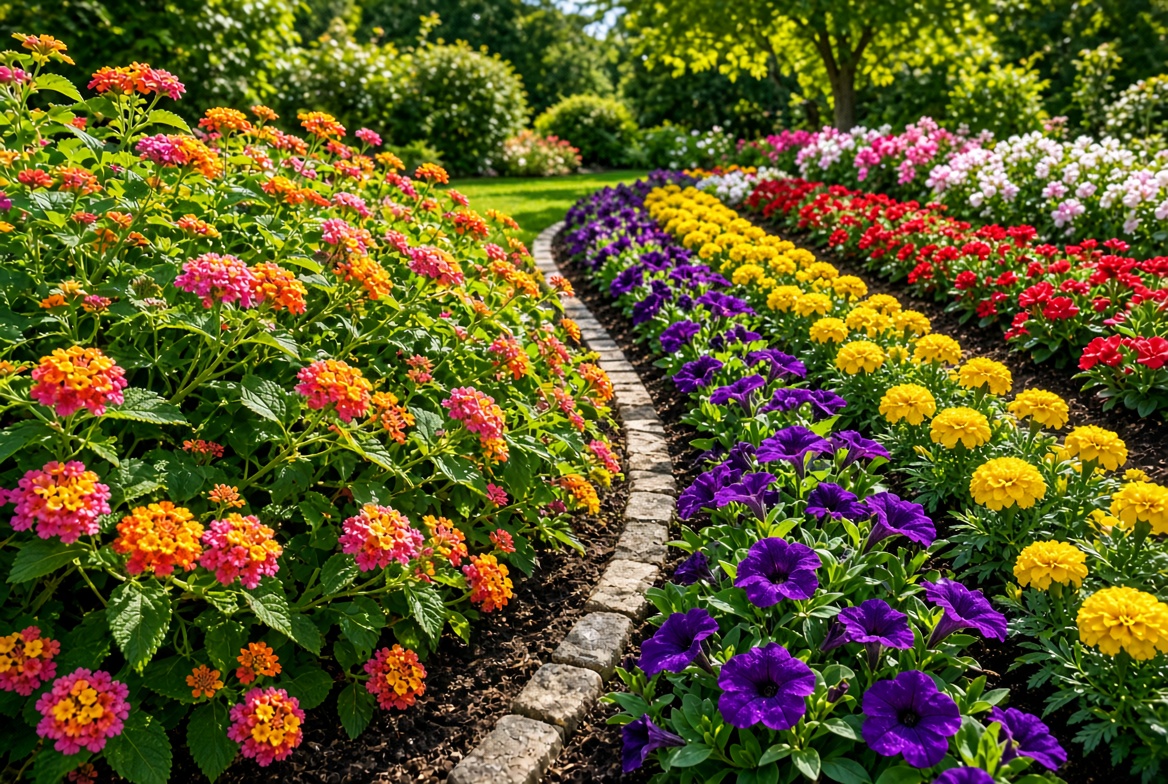
Traditional bedding plants still dominate many garden centers every spring. Petunias, marigolds, impatiens, begonias, and geraniums get packed into flats and sold with the promise of quick color. They deliver that color for a while. Then July arrives, the thermometer climbs, and a lot of those same plants start looking tired. Flowers fade faster. Leaves scorch. Watering becomes a daily chore just to keep them from collapsing.
Lantana sits in a different category. Once it settles in, the heat that slows everything else often makes it bloom harder. That difference is why more gardeners in warmer regions, and increasingly farther north during hot stretches, are choosing it over the usual annual rotation.
How the two groups actually behave in heat
Most traditional bedding plants are selected for flower power and uniform shape under nursery conditions. Many of them prefer consistent moisture and moderate temperatures. Petunias can handle sun, but prolonged high heat and dry soil often cause them to stop setting buds until cooler weather returns. Impatiens (the classic busy Lizzie types) dislike strong sun and dry air. Even heat-tolerant marigolds and zinnias need more regular water than people expect once the soil bakes.
Lantana, by contrast, evolved in warmer climates. It wants full sun and well-drained soil. Once the roots are established, it tolerates dry spells that would set traditional annuals back. In many trials and real gardens, it continues flowering through the hottest weeks of summer when neighboring petunias have gone sparse. The flower clusters keep coming in shades of yellow, orange, pink, red, purple, and white, often with multiple colors on the same head.
That does not mean lantana is maintenance-free from day one. Newly planted starts need regular water while they root. Overwatering is a more common problem than underwatering after that point. Too much moisture and the plant produces fewer flowers and risks root issues.
Bloom length and the work required to keep it going
Traditional bedding often needs deadheading or at least occasional trimming to stay tidy. Some modern series of petunias and marigolds are self-cleaning and need less intervention, but many still benefit from regular attention. Impatiens and begonias can look ragged by midsummer if conditions turn against them.
Lantana keeps producing new clusters for months in the right climate. Newer sterile or near-sterile hybrids bloom even more consistently because they do not put energy into setting seed. Older types may need occasional light pruning or deadheading of spent clusters to encourage continuous flowering, but the plant is generally less fussy than a bed of classic petunias once it is growing strongly.
In frost-free zones lantana can act as a woody perennial and return for years. In colder areas it is treated as an annual or overwintered indoors. That is the same practical limitation many tender bedding plants face.
Water use and real-world effort
This is where the comparison becomes practical. Traditional bedding schemes often require frequent irrigation, especially in containers or sandy soil. Miss a couple of days in a heat wave and the display suffers. Lantana, after establishment, can get by with less. In many landscapes it performs on once-a-week watering or less during dry periods. That lower demand is useful where water restrictions exist or where the gardener simply does not want daily hose duty.
Containers change the equation somewhat. Lantana in pots still needs more frequent water than the same plant in the ground because the root volume is limited. Even so, it usually recovers faster from a missed watering than a petunia or impatiens in the same size pot.
Pollinators and the garden around the plants
Many traditional bedding varieties have been bred for double flowers or dense petal packing. Those traits look showy to people but often make nectar and pollen harder for insects to reach. Some series are essentially sterile from a pollinator’s point of view.
Lantana flower clusters are open and accessible. Butterflies, bees, and hummingbirds visit them readily. In gardens where supporting insects matters, that is a clear advantage. The plant does not guarantee a balanced ecosystem on its own, but it contributes more useful forage than many double-flowered bedding types.
The downsides that matter
Lantana is not perfect. In parts of the southern United States, Florida, Texas, Hawaii, and some other warm regions, certain types of Lantana camara can behave invasively. They seed freely and spread into natural areas. Newer sterile cultivars reduce that risk substantially. Checking local extension recommendations before planting is worthwhile, especially in frost-free zones.
Toxicity is another practical issue. The ASPCA lists lantana as toxic to dogs, cats, and horses. The unripe green berries are the most dangerous part; leaves and flowers can also cause problems if eaten. Symptoms can include vomiting, diarrhea, weakness, and in more serious cases (especially for livestock) liver involvement. If pets or children frequently explore the garden, this plant needs to be placed carefully or avoided. Many traditional bedding plants are safer on that score, though individual species still need checking.
Lantana also has a distinct scent when the leaves are crushed. Some people find it pleasant; others prefer to keep it away from paths and seating areas.
When traditional bedding plants still make more sense
Cooler climates or sites with afternoon shade favor the classics. Impatiens and many begonias perform better in partial shade than lantana, which wants strong sun. Early-season color before the soil fully warms is often easier with pansies, violas, or cool-season petunias. Mass plantings that need a very uniform low height or specific color blocks can still be simpler with marigolds or bedding geraniums.
Cost and availability also play a role. Flats of traditional annuals are often cheaper and easier to find in large quantities for big displays. Lantana is usually sold as larger individual plants or smaller packs of hybrids, which can raise the upfront price for covering the same area.
In mixed borders the two groups can work together. Lantana supplies the mid-to-late summer backbone while shorter traditional annuals fill the front edge or provide early color.
Practical choices for different situations
For a hot, full-sun bed or large containers that receive little shade, start with modern compact or trailing lantana hybrids. Look for sterile series if invasiveness is a concern in your area. Give them good drainage and avoid constant wet soil. Once they are growing, reduce watering frequency and watch how they respond.
For shaded entryways or cooler microclimates, stick with proven bedding choices that match the light levels. New Guinea impatiens or sun-tolerant begonias handle more light than the old busy Lizzies, but they still want more consistent moisture than lantana.
If water use or summer reliability is the main problem with past plantings, shifting some of the hottest, driest spots to lantana often produces better results with less effort. The plant will not solve every garden challenge, and it will not look identical to a bed of Wave petunias. What it does offer is color that keeps coming when temperatures stay high and watering becomes less frequent.
Gardeners who have watched traditional bedding decline in midsummer heat usually notice the difference within a single season. The plants that keep flowering without constant intervention stand out. Lantana is one of the clearer examples of that shift in many warmer and transitional climates.