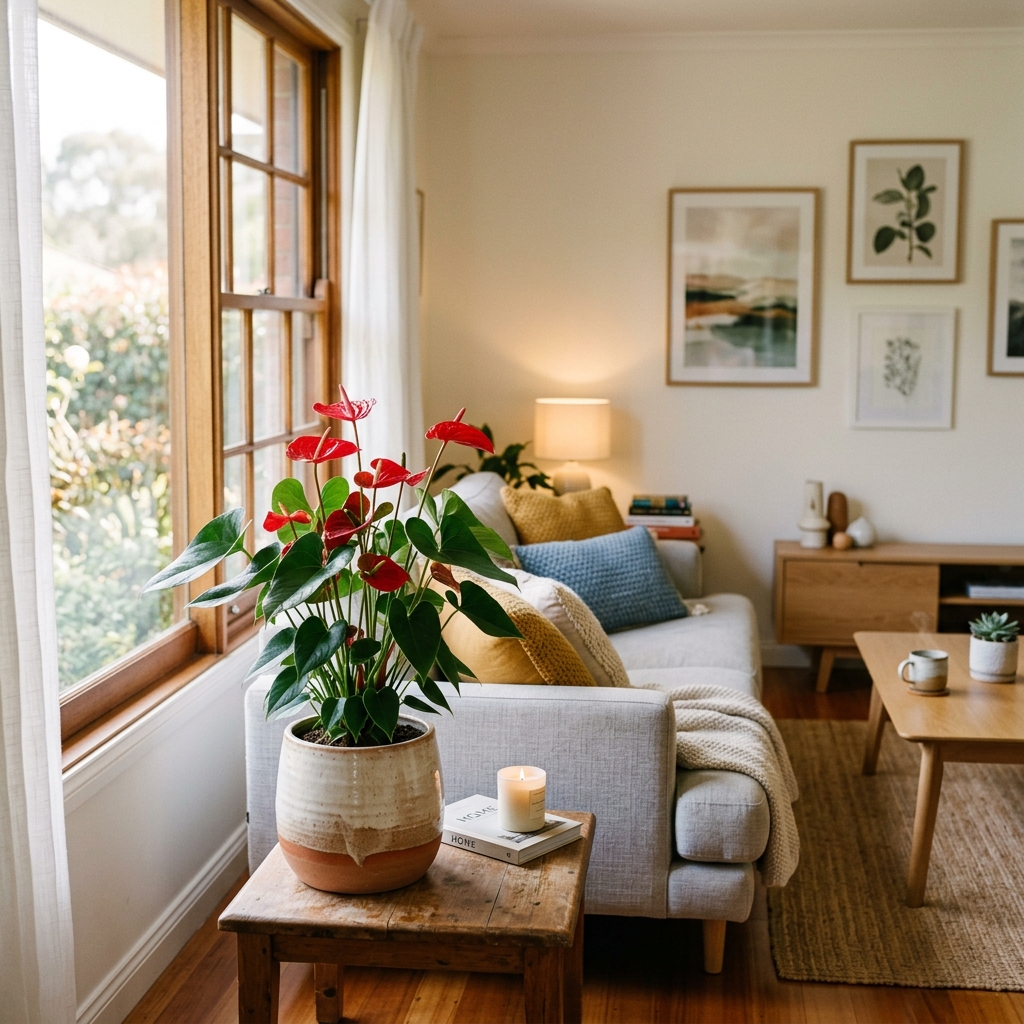
Learn how to care for anthurium plants (flamingo flowers) with easy tips on light, watering, humidity, feeding, repotting, and fixing common problems.
Anthuriums like bright, indirect light, watering only when the top two inches of soil feel dry, high humidity, and warm temperatures between 65 and 80°F. Feed them lightly in spring and summer, repot every two or three years, and keep them away from pets and kids since the whole plant is toxic.
Anthuriums are those glossy, heart-shaped plants with the waxy red “flowers” you’ve probably seen in offices and hotel lobbies. And here’s a fun thing most people don’t realize. Those bright red bits aren’t actually flowers. They’re modified leaves called spathes. The real flower is the little spike poking out of the middle.
People also call them flamingo flowers or laceleaf plants. The scientific name is Anthurium andraeanum, if you want to sound smart at your next plant swap. They come from the warm, humid forests of the Caribbean and parts of South America, which tells you almost everything about how to keep them happy.
Good news too. They look high-maintenance but they really aren’t. Get a few basics right and one of these can bloom for most of the year. Some folks call it one of the longest-blooming houseplants around, and honestly that reputation is earned. Let’s get into it.
Light: bright, but keep it off the leaves
Anthuriums want bright, indirect light. Think of a spot near a window where the sun doesn’t hit the plant straight on. An east-facing window is pretty much perfect since you get gentle morning sun and nothing harsh later.
Too much direct sun and the leaves scorch. You’ll see brown or bleached patches, and once that happens the leaf doesn’t recover. On the flip side, a dark corner isn’t great either. Too little light slows growth way down and you’ll get few or no blooms.
So if your anthurium looks healthy but just won’t flower, light is usually the first thing to check. Move it somewhere brighter (still no direct sun) and give it a few weeks.
Watering without drowning it
This is where most people mess up. Overwatering kills more anthuriums than anything else.
The rule is simple. Stick your finger in the soil. If the top two inches feel dry, give it a drink until the soil is lightly moist. If it’s still damp, wait. Soggy soil leads to root rot, and root rot is a slow miserable way to lose a plant.
In spring and summer you’ll probably water about twice a week. In winter, once a week or even less is plenty since the plant slows down. Always use a pot with drainage holes, and never let it sit in a saucer full of water.
One more thing. If you forget about it for too long and the soil goes bone dry, watering from the top might just run straight through. When that happens, sit the whole pot in a basin of water for about an hour so the roots can soak it back up.
Getting the soil right
Anthuriums hate heavy, waterlogged soil. In the wild their roots cling to trees and get air, so you want something loose and quick-draining.
A regular potting mix on its own holds too much water. Better options:
- An orchid mix
- A 50/50 blend of potting soil and perlite
- A mix of orchid bark and peat
Any of these give the roots the drainage and air they need. If you only remember one thing here, it’s that drainage matters more than the exact recipe.
Warmth and humidity, the tropical part
These plants come from tropical forests, so they like it warm and steamy. Keep temperatures between 65 and 80°F and you’re golden. Below about 50°F, growth basically stops, and cold drafts from windows or AC vents will stress the plant out. So keep it away from those.
Humidity is the part people forget. Anthuriums love high humidity, ideally up around 80%, which is way more than most homes have. A few ways to help:
- Mist the leaves every couple of days in spring and summer
- Run a small humidifier nearby
- Set the pot on a tray of pebbles with a little water in it
- Keep it in a bright bathroom, which tends to stay humid on its own
You don’t have to do all of these. Pick whatever fits your space.
Feeding for more blooms
Anthuriums aren’t heavy feeders, but a little food during the growing season goes a long way toward more flowers.
In spring and summer, feed with a balanced liquid fertilizer diluted to about a quarter strength, roughly every couple of weeks. Or if you’d rather not fuss, some people use a slow-release pellet fertilizer made for indoor plants and reapply every six months. Skip fertilizing in fall and winter when the plant is resting.
Don’t overdo it. Too much fertilizer can burn the roots and do more harm than good.
Repotting every couple of years
Anthuriums grow slowly, so they don’t need repotting often. Every two or three years is about right.
Watch for the signs: roots poking out the drainage holes or circling around on top of the soil. That’s the plant telling you it’s cramped. When you repot, go up just one pot size and use fresh, well-draining mix. Bumping it into a giant pot doesn’t help and actually raises the risk of overwatering.
Pruning, aerial roots, and making new plants
When a flower fades and starts to droop, snip that stalk off close to the base. This tidies the plant up and pushes it to send out fresh growth.
You might also notice little white or green root-like arms growing off the stems above the soil. Those are aerial roots, and they’re totally normal. In nature they help the plant grip onto trees. You can leave them or trim them off if they bug you. Either way the plant’s fine.
Want more anthuriums for free? You can propagate them a couple of ways. When you repot, you can gently divide the root ball into two plants. Or take a stem cutting with at least two nodes on it, then root it in water, perlite, or straight into potting mix. Use clean scissors so you don’t spread anything nasty.
Reading the warning signs
Anthuriums are pretty good at telling you when something’s off. A few common ones:
- Yellow leaves. Usually too much light. Move it away from direct sun.
- Brown, crispy leaf edges. Often underwatering or low humidity.
- Brown, mushy spots or wilting. Classic overwatering and possible root rot. Ease off the water and check the drainage.
- No flowers. Almost always not enough light, sometimes not enough food.
- Pests. Sucking bugs like aphids and mealybugs can show up. Wipe the leaves down with neem oil or an insecticidal soap and keep an eye out so you catch them early.
Most problems trace back to water or light. When in doubt, check those two first.
One important safety note
Anthuriums are toxic. To cats, dogs, and people. The sap can irritate your skin and eyes, and every part of the plant is poisonous if eaten. So keep it up high, away from curious pets and little kids. And it’s worth wearing gloves when you’re pruning or repotting, just so the sap doesn’t get on your hands.
Wrapping up
That’s really all there is to it. Bright indirect light, careful watering, a bit of warmth and humidity, and the occasional feed. Do those few things and your anthurium will reward you with those bold red spathes for months on end.
If your plant ever starts looking sad, don’t panic. Go back through the signs above, tweak one thing at a time, and give it a little patience. These plants are tougher than they look.