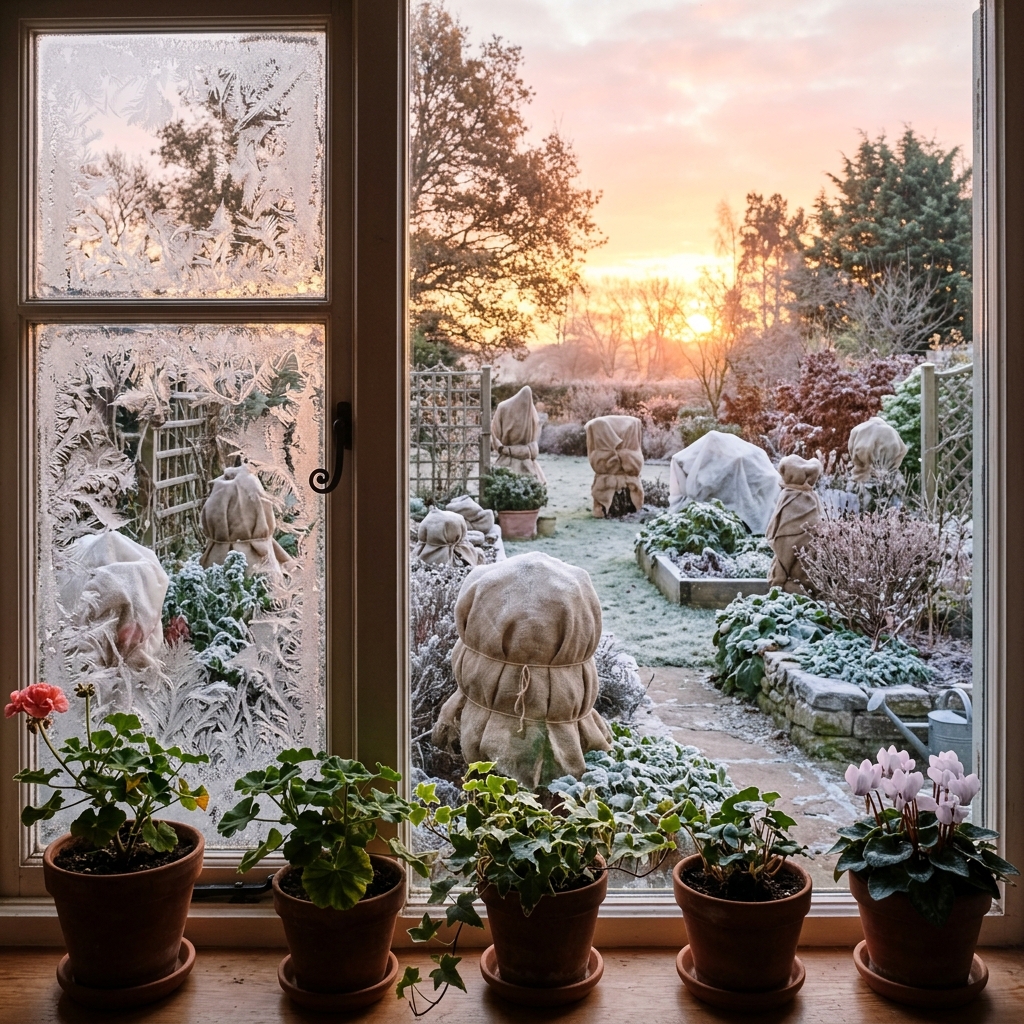
To save plants from frost, cover them with sheets or row covers before nightfall, water the soil beforehand, and move potted plants indoors. If damage already happened, wait a few days before you touch anything, then prune only the parts that are truly dead. Patience matters more than you’d think.
Frost sneaks up on gardeners. One clear, calm night and suddenly your tomatoes look like wet paper, your peppers droop, and that tropical plant you babied all summer turns an ugly shade of brown.
It stings. Especially when a little prep could’ve saved everything.
The good news? Most frost trouble is preventable. And plants that do get hit aren’t always goners. Below you’ll find how frost actually hurts plants, which ones to worry about, and what to do both before and after the temperature drops.
What’s Actually Happening When Frost Hits Your Plants
Frost forms when ice crystals develop on the surface of a leaf. Here’s the tricky part. This can happen even when the air reads slightly above freezing, because the plant’s surface cools faster than the surrounding air. The National Weather Service usually puts out frost advisories when overnight lows land between 33 and 36°F.
A freeze is a different beast. According to Iowa State University Extension, a freeze happens when both the air and the inside of the plant drop below 32°F. When that happens, water inside the plant cells turns to ice. The cells rupture, tissue collapses, and you get that telltale brown or black mush the next morning.
There’s also something called chilling injury. The University of Florida IFAS Extension (2026) notes that temperatures between 32°F and 50°F can mess with a plant’s internal processes, like photosynthesis and respiration, without ever freezing it solid. Tropical and subtropical plants take this hard since they never developed the tricks temperate plants use to cope with cold.
And don’t forget drying out. Cold, dry winds pull moisture from leaves faster than chilly roots can replace it. UF/IFAS calls this desiccation. Mild cases show up as burnt leaf tips. Bad ones leave the whole leaf crispy and brown.
The Plants You Should Worry About First
Not everything in your garden needs rescuing. Some plants shrug off cold. Others fold at the first hint of it.
The most vulnerable are your tender, warm-season crops and tropicals. Think:
- Tomatoes (damaged around 32 to 34°F)
- Peppers and eggplant
- Beans and cucumbers
- Squash, okra, and sweet corn
- Basil and most annual herbs
- Any tropical or subtropical houseplant living outside
Young, actively growing plants are more fragile than mature or dormant ones. Flowers and fruit are especially sensitive too, since they can’t toughen up against cold the way woody stems can.
On the flip side, a lot of vegetables actually handle frost fine. Kale, cabbage, spinach, Brussels sprouts, and collards can take temperatures below 28°F for short stretches. Some even taste better afterward. Carrots get sweeter as the soil cools, and broccoli flavor improves once it’s felt a frost. So before you go covering everything in sight, figure out what genuinely needs protection.
How to Spot Frost Damage on Your Plants
Sometimes it’s obvious. Sometimes it takes a day or two to show.
Watch for these signs:
- Leaves turning brown, black, or translucent
- Wilting or collapsed stems that were fine yesterday
- Burnt, crispy edges on the tips of leaves
- Soft, water-soaked spots on foliage
Here’s the thing though. Cold damage often looks way worse right after a freeze than it really is. A plant that seems dead on Tuesday morning might push out new growth two weeks later. So don’t panic and don’t grab the pruners just yet.
Smart Moves Before the Cold Rolls In
A little prep goes a long way. Once you see those overnight lows creeping into the mid-30s on the forecast, it’s time to act.
Water the soil first. This sounds backward, but moist soil holds up to four times more heat than dry soil. That stored warmth radiates up overnight and can keep the air around your plants roughly 5°F warmer. Just water in the afternoon or early evening, not so much that the ground turns to mud.
Bring the pots inside. The easiest fix of all. Potted tropicals and annuals can move to a garage, a porch, or a sunny window indoors. If a clay pot has to stay outside, wrap it in burlap or bubble wrap so it doesn’t crack in the cold.
Pick better spots for tender plants. A garden that slopes toward the sun warms up more during the day. Cold air, which is heavy, drains away downhill instead of pooling around your plants. Low spots and open, exposed areas are the worst places for anything delicate. Near a south- or west-facing wall is much better, since the wall soaks up heat all day and gives it back at night.
Harden off young plants. If you started seedlings indoors, don’t just plunk them outside. Ease them into cooler temperatures over a week or so. Iowa State Extension points out that hardened plants survive frost far better than pampered ones.
Your Frost-Night Game Plan
When the cold’s actually coming, covering plants is your main line of defense.
Grab old bed sheets, blankets, towels, drop cloths, or proper row covers. Skip plastic. It doesn’t insulate well and can actually make things worse where it touches the leaves. The whole point is to trap the ground’s warmth before it escapes into a clear night sky.
A few rules that matter:
- Drape covers loosely so air can still move around
- Keep the fabric off the foliage using stakes, PVC hoops, tomato cages, or even patio furniture
- Anchor the edges to the ground with rocks or bricks so warmth stays trapped underneath
- Put covers on in the early evening as the wind dies down
- Pull them off mid-morning once temperatures climb back above freezing, so plants get their sunlight
One honest limitation. Covering stops working reliably once temperatures fall below about 28°F. And even above that, a long freeze of five hours or more can still cause damage. For a few small plants, you can rig up mini cloches from cut plastic bottles. And that old trick of setting out black-painted jugs of water works too. They soak up heat by day and release it at night.
Bringing Frost-Damaged Plants Back
So the frost won and some of your plants got hit. Don’t write them off yet.
Wait before you do anything. This is honestly the hardest part. UF/IFAS recommends holding off 3 to 7 days, sometimes longer, before you assess the real damage. Rushing in to prune or fertilize just stresses the plant more and can trigger weak new growth that the next cold snap will kill.
Use the scratch test. Gently scrape a bit of bark with your fingernail. Green underneath means that wood’s still alive. Brown or black means it’s dead. Simple as that. Green is alive, brown is dead.
Prune carefully, and only what’s dead. Cut back to healthy, green tissue. A lot of the time the damage is just at the branch tips, so you might need less trimming than you’d guess. Not sure? Wait until new growth appears so you don’t accidentally cut off living wood. There’s a bonus here too. Leaving dead tissue in place actually insulates the healthy parts underneath from any follow-up freezes.
Ease off on water and food. Go back to normal watering, keeping the soil slightly moist but never soggy. Morning watering is best. Hold off on fertilizer until spring growth kicks in, and when you do feed, go light and slow-release. High nitrogen too early just pushes out tender growth that’s begging to get zapped again.
And here’s the encouraging bit. Lots of tropical and subtropical plants regrow straight from their roots even when everything above ground looks fried. Recovery can drag on for months, so give them a real chance before you dig them up.
Setting Up a Garden That Handles Cold Better
If you’re tired of scrambling every time frost threatens, build some resilience into the garden itself.
Mulch is your friend. A 2 to 3 inch layer of straw, wood chips, pine needles, or leaf mold insulates roots and helps hold soil warmth. It also protects the soil life underneath, all those worms and fungi doing quiet work down there.
Use what’s already around you. Fences, boulders, shrubs, and walls all double as windbreaks and heat sinks. A big body of water nearby moderates temperature too. Even planting things closer together creates a small canopy that traps heat rising from the soil.
Choose the right plants for cold-prone areas. If part of your yard always seems to catch the frost first, that’s the spot for hardy stuff like kale, spinach, and cabbage, not your basil.
And keep an eye on the forecast. Starting in early fall, get in the habit of checking those overnight lows. Frost dates are just averages based on years of data. They can’t predict this particular season, and they don’t account for the odd microclimate in your own yard. When the numbers start dropping, you’ll already know what to do.