A houseplant that needed water five days after its last soaking may take nine days the next time. Nothing has necessarily gone wrong. A cloudy week, cooler room, slower growth, larger pot, or change in season can leave the potting mix moist for much longer than it was before.
That is why “water once a week” works poorly as a general houseplant rule. The calendar can remind you to check the plants, but it can’t tell you whether their roots are ready for more water. Even two pots sitting beside each other can dry at noticeably different rates.
For most houseplants, a better approach is to learn how the pot changes between freshly watered and ready to be watered again. Soil feel is usually the easiest place to start, while pot weight, plant type, light, temperature, container size, and the time of year give you more context.
The question becomes less about counting days and more about recognizing when the root zone has reached the right level of dryness for that plant.
Use a Schedule for Checking, Not for Pouring Water
Keeping a routine still helps. If Saturday morning is when you remember your plants, use Saturday morning to inspect them rather than automatically carrying a full watering can from one pot to the next.
One plant may be dry enough to water while another still feels moist below the surface. A third plant may be a succulent that should remain dry for longer. Watering all three simply because seven days have passed ignores what is happening inside each container.
Iowa State University Extension makes this distinction directly. Watering frequency changes with light, temperature, humidity, potting mix, container, plant size, species, and season, so checking on a regular schedule works better than watering on one.
This becomes easier once you stop expecting every plant to fit the same interval. A loose routine develops naturally after you have owned a plant for a while, but that routine should remain flexible.
Your Finger Is Still One of the Better Watering Tools
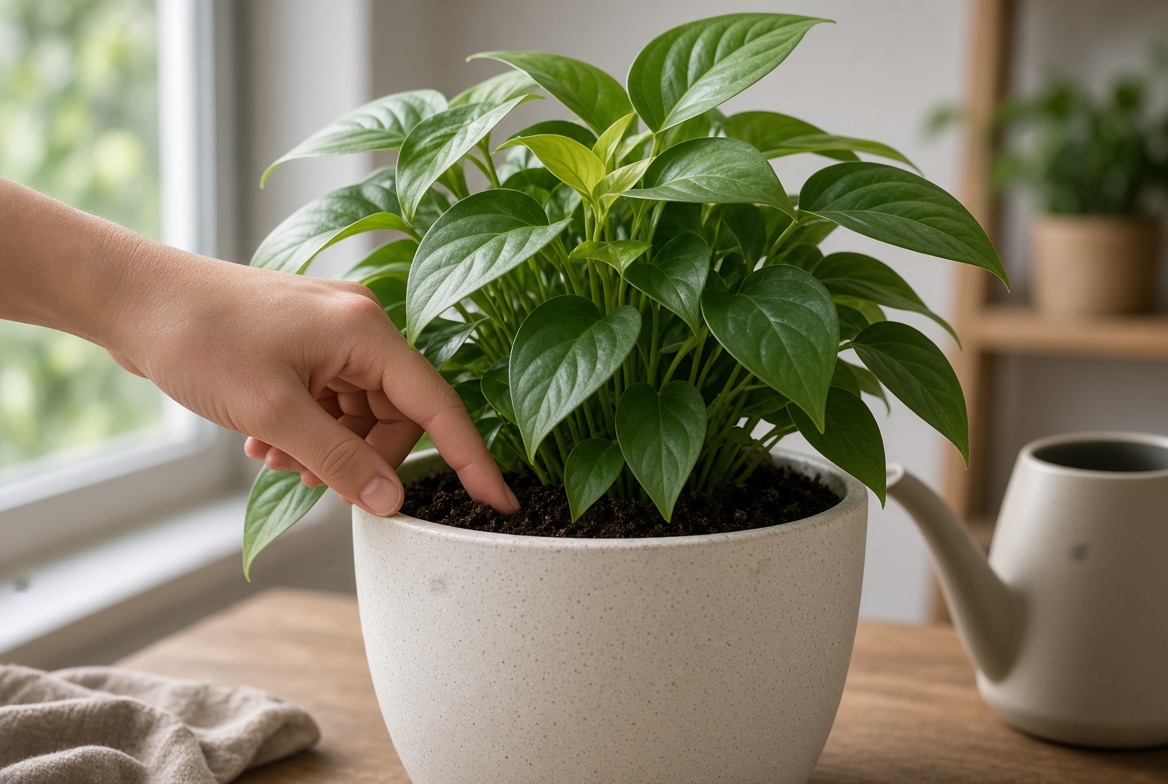
For an ordinary houseplant in a moderate-size pot, touching the potting mix can tell you more than the date on a calendar.
Push a finger into the mix rather than brushing the surface. The top dries first because it is directly exposed to room air, while the soil farther down may remain damp. Iowa State suggests checking about an inch down, while Illinois Extension recommends checking to roughly two inches; the useful depth depends partly on the size of the container.
That difference is worth understanding because “the soil looks dry” can be misleading. A twelve-inch pot may have a dry-looking surface while the lower half remains quite wet.
Plants also differ in how much drying they tolerate. A cactus shouldn’t be treated the same way as a moisture-loving tropical plant, so the finger test tells you the condition of the soil rather than making the decision for you.
Learn What the Pot Feels Like When It Is Wet and Dry
Lifting a plant can become surprisingly informative after you have handled the same pot several times.
Water adds considerable weight to potting mix. A freshly watered plastic nursery pot often feels noticeably heavier than the same pot after much of that water has been used or lost. Maryland Extension recommends pot weight as another way to judge whether enough moisture remains in the growing medium.
Try lifting the pot after a thorough watering and then again over the following days. You don’t need to weigh it or remember a number; you are simply learning the difference.
This method becomes especially handy when the top of the soil is difficult to read. A pot that still feels heavy probably doesn’t need more water merely because its surface has become lighter in color.
Large ceramic floor pots are harder to judge this way, so soil checking may remain more useful for them.
“Once a Week” Can Be Too Often and Not Often Enough at the Same Time
Imagine a small fern, a large pothos, and a snake plant sharing one room. Giving all three water every Sunday creates the appearance of consistency, but the plants aren’t experiencing the same moisture conditions.
The fern may use water quickly and prefer the mix not to become severely dry. The pothos may need a moderate wet-and-dry cycle. The snake plant stores water in its leaves and can usually remain dry considerably longer.
Their containers may add even more difference. A small terracotta pot can lose moisture faster than a larger plastic pot because it contains less mix and water can evaporate through the porous clay walls. Virginia Tech notes that both container volume and container material affect how quickly the root zone dries.
A single weekly interval therefore tells you very little without the plant and pot around it.
Light Quietly Changes How Often You Need the Watering Can
Plants generally use more water when they are actively growing under brighter conditions. Weaker light often slows growth and extends the time that moisture remains in the pot.
This matters after moving a plant.
Suppose a philodendron has been growing close to a bright east-facing window and usually becomes ready for water within several days. You move it six feet into the room but continue watering at the old pace. The plant may now use water more slowly, leaving the soil damp for longer than it did near the window.
Illinois Extension includes light among the factors that affect watering frequency, while Virginia Tech notes that indoor growing conditions change how quickly containers dry.
Whenever a plant changes location, pay attention to the next few drying cycles instead of assuming its old timing will continue.
Summer and Winter Rarely Produce the Same Watering Pattern
A plant can remain in exactly the same place and still change its water use through the year.
Spring and summer often bring longer days and more active growth. Warmer temperatures can also speed moisture loss from the potting mix. During autumn and winter, weaker daylight and slower growth can leave the same container moist for longer.
Virginia Tech advises closer monitoring during autumn and winter because many indoor plants use less water as growth slows, while warmer growing periods can shorten the interval between waterings.
That doesn’t mean every houseplant should suddenly move from seven-day watering to fourteen-day watering in winter. A warm home with bright windows or grow lights can produce a very different pattern from a cool room with weak winter light.
Watch the pot rather than imposing a seasonal number on it.
Pot Size Can Quietly Create a Watering Problem
A much larger pot may sound safer because it holds more soil and gives the roots room to grow, but too much extra potting mix can remain wet for longer than a small root system can comfortably use.
Iowa State recommends balancing enough room for growth with a container that still allows the potting mix and roots to dry within a reasonable period. Virginia Tech likewise notes that large containers store more water, while small containers tend to dry faster.
This becomes noticeable after repotting. A plant that once dried every five days may suddenly remain wet for ten because its new container holds far more moist mix around the same root ball.
The opposite can happen to an established root-bound plant. As roots occupy most of a small container, there is less free potting mix holding moisture, and the plant may begin needing water much sooner.
A sudden change in drying speed is worth noticing rather than forcing the plant back onto its old timetable.
Terracotta and Plastic Don’t Behave the Same Way
Unglazed terracotta allows moisture to evaporate through its porous walls. Plastic and glazed ceramic don’t lose water through the container wall in the same way, so the potting mix tends to remain moist longer under otherwise similar conditions.
Virginia Tech describes terracotta as faster drying and notes that this can suit plants that prefer a drier root zone, while moisture-loving plants may need more frequent checking in porous pots.
This is why moving a plant from plastic into terracotta can alter its watering pattern even if you keep the same soil and location.
Neither pot material is automatically better. It simply becomes another part of how quickly the root zone changes from wet to dry.
Potting Mix Decides How Much Water Stays Behind
Two containers of the same size can hold moisture very differently if their potting mixes aren’t alike.
Fine or fibrous ingredients such as peat and coconut coir can retain substantial moisture, while coarser materials such as bark and perlite create larger air spaces and tend to drain more readily. Virginia Tech points out that the ratio of these ingredients changes both water retention and the amount of air available around the roots.
This explains why an orchid growing in coarse bark can’t sensibly follow the same watering interval as a tropical foliage plant growing in a finer peat-based mixture.
Potting mix also changes with age. As ingredients break down and the mix becomes denser, its old drying pattern may change. A pot that suddenly stays wet much longer than it once did deserves a closer look at the condition of its soil and roots.
Water Thoroughly Instead of Giving Frequent Small Sips
“How often?” and “how much?” are separate parts of watering.
Reducing frequency doesn’t mean giving a plant only a tiny amount each time. For most conventionally potted houseplants, the aim is to wet the root zone thoroughly and then allow it to dry to an appropriate level before watering again.
Virginia Tech specifically distinguishes watering volume from watering frequency: the potting mix should be hydrated through its depth, while the plant should not be watered again simply because a certain number of days have passed. Iowa State also recommends saturating the soil and allowing excess water to leave through the drainage hole.
Repeated little splashes can wet the surface while leaving deeper portions of the root ball dry. Water applied slowly across the soil is more likely to reach the full root zone.
Once water drains from the bottom, allow the pot to finish draining rather than leaving the roots standing in the collected runoff.
Drainage Holes Make Watering Far Easier to Manage
A pot with no drainage hole gives excess water nowhere to escape.
The surface may appear reasonably dry while the lower part of the container remains saturated, which makes it difficult to know how much moisture is still around the roots. Iowa State recommends drainage holes for houseplant containers and warns that a layer of gravel at the bottom doesn’t substitute for an actual outlet.
A decorative pot can still be used without planting directly into it. Keep the plant in a plastic nursery pot with drainage holes, remove it for watering, let the excess drain, and then return it to the outer container.
If the plant sits over a saucer, empty accumulated water rather than leaving the base of the pot submerged for a long period. Illinois Extension also advises allowing excess water to drain and then emptying the saucer.
Wilting Can Send You in the Wrong Direction
Wilting looks like a request for water, but it isn’t always one.
A dry plant may wilt because the roots can’t supply enough moisture to the leaves. A plant kept excessively wet can also wilt after damaged roots lose their ability to function properly. Illinois Extension specifically warns that wilting can be a sign of both insufficient and excessive watering.
The soil separates those situations far better than the leaves do. A wilted plant in very dry mix may genuinely be thirsty, while a wilted plant sitting in heavy, wet soil shouldn’t automatically receive another soaking.
Waiting for dramatic wilting before every watering isn’t ideal either, especially for plants that dislike becoming severely dry. Soil condition and pot weight let you make the decision earlier.
Sometimes Water Runs Through Because the Soil Is Too Dry
Water pouring quickly from the drainage holes doesn’t always mean the root ball has been watered thoroughly.
Very dry peat- or bark-based potting mixes can become difficult to wet. The mix may shrink from the walls of the container, allowing water to travel down the gap and leave the pot while the center remains dry.
Virginia Tech describes this condition as hydrophobic potting mix and recommends slow repeated applications or bottom watering when necessary to rehydrate it.
Pot weight gives you a useful clue here. If a supposedly watered plant still feels unusually light, check deeper in the root ball rather than assuming the water reached everything.
Watering slowly in several passes often works better than pouring a large amount through the pot all at once.
Bottom Watering Has a Place, but It Isn’t Required for Every Plant
Bottom watering allows the potting mix to draw water upward through drainage holes. A plant is placed temporarily in shallow water and removed after moisture has moved through enough of the root zone.
This can help with a potting mix that is difficult to rewet and with plants whose dense or sensitive foliage makes top watering awkward. Virginia Tech notes that bottom watering can work for plants such as African violets and for rehydrating overly dry potting mix.
Top watering remains perfectly suitable for many ordinary houseplants. Maryland Extension recommends watering from above until water drains freely through the container, while Illinois recognizes both top and bottom watering methods.
Whichever method you choose, don’t leave the container sitting in water indefinitely. The root zone needs air as well as moisture.
Cacti, Succulents, and Tropical Foliage Shouldn’t Share One Rule
Some of the confusion around houseplant watering comes from trying to write one rule for plants with very different biology.
Succulents and cacti store water in their leaves, stems, or other tissues and generally tolerate a much drier interval between waterings. Virginia Tech gives them as examples of plants that often receive thorough but relatively infrequent watering, while many tropical houseplants are checked more often.
Even among tropical plants, preferences vary. Some tolerate considerable drying, while others perform better when the root zone remains more evenly moist.
Start with the species, then use the condition of the pot to decide when its next watering belongs. “Houseplant” describes where the plant lives, not one shared watering requirement.
Moisture Meters Are Most Useful as a Second Opinion
A basic moisture meter can be handy in a deep container where reaching far enough into the soil is difficult. It may also help someone who hasn’t yet learned the weight and feel of their pots.
The reading shouldn’t become another rigid rule. Illinois Extension notes that moisture-meter probes can be useful but aren’t always dependable.
Probe placement, the composition of the potting mix, and local pockets of moisture can all affect what the meter tells you. Taking several readings around a large container is more informative than relying on one spot.
A meter works best alongside the other evidence rather than replacing it.
What Changed If the Pot Suddenly Dries Much Faster?
Once you know a plant, a change in its drying speed can tell you something before the leaves begin complaining.
Faster drying can accompany warmer weather, brighter light, active new growth, or roots filling more of the container. Small containers also hold less water and tend to dry sooner than large ones.
Much slower drying points in another direction. The plant may have been moved into weaker light, growth may have slowed with the season, the room may be cooler, or the plant may now be sitting in a much larger pot.
The changing interval isn’t necessarily a problem. It is information about what is happening around the roots.
A Simple Houseplant Watering Routine
Pick regular days to inspect your plants, especially if you own enough of them that forgetting one is easy. Check the soil at a useful depth, lift smaller pots when possible, and think about how dry that species normally prefers to become.
Water the plants that are ready and leave the damp ones alone. When you do water, wet the root ball properly and let excess water drain from the container. Over the next few weeks, you will begin seeing which pots dry quickly and which ones routinely take longer.
Those patterns can help you know which plants deserve checking first, but they shouldn’t harden into another fixed calendar rule. Weather changes, seasons change, roots grow, and plants get moved.
The calendar is good at telling you when seven days have passed. The potting mix is much better at telling you whether a houseplant actually needs water.